From hotel telephone directories to a sales network in 105 countries, Pierluigi Taddei retraces Euroricambi Group’s history, its long-standing relationships, in-house production, technological investment and approach to the energy transition.
The briefcase, hotel telephone directories and journeys to meet customers who did not yet know that aftermarket spare parts could be purchased at a competitive price without compromising on quality, but who would soon become, in some cases, lifelong business partners.
In Pierluigi Taddei’s memories, the story of Euroricambi Group is closely linked to the choices his father made and the relationships he built. A legacy that continues to shape the way the company invests, organises production and works with people. Today, as then, these are fundamental elements of a business that is both practical and visionary.
From its origins to international expansion and the prospects of the energy transition, Taddei describes the approach that underpins the company and the meaning of Move Beyond, the new concept accompanying the historic company from Emilia-Romagna as it communicates an identity built over time.
Let’s start with your father’s original insight: what remains of that vision today in a Group that has become a world leader?
The most important legacy is his way of working. He was passionate and ambitious, but he had great respect for people. He enjoyed travelling, discovering different cultures and building relationships that often developed into friendships. In our business, unlike in other sectors, customers work with the products we supply and experience their quality first-hand. The relationship must therefore last for years and be based on complete trust.
The same principle applies within the company. My father spoke to everyone and never put himself on a pedestal. He passed on to us and his colleagues a way of doing business based on honesty and responsibility, combined with the ability to anticipate market changes and always look ten or twenty years ahead.
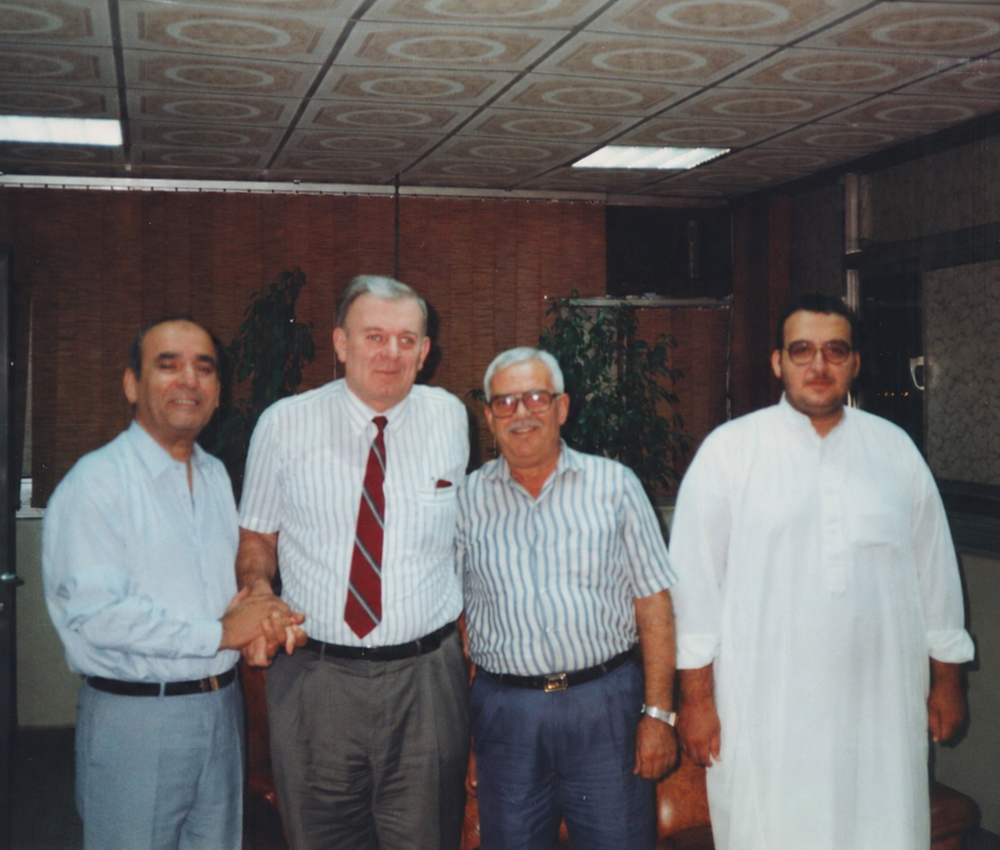 Mr. Orazio Taddei visiting international customers, late 1980s.
Around 97% of turnover comes from exports. How do you build and consolidate a sales network across 105 countries?
My father started out when the internet and mobile phones did not exist. He would set off with his briefcase, accompanied by someone who spoke English, because he did not. When he arrived at a hotel, he would ask for the telephone directories, look for companies that might be interested in spare parts and start calling them. Those who were available would agree to meet him. Business was built face to face.
As the company grew, area managers and local representatives joined the team, allowing us to maintain a presence even in the most distant markets. The network was built through this presence and strengthened through continuity in our work and relationships. With many agents, relationships based on mutual respect and personal friendship have developed, standing the test of time and distance. Our decision to manufacture aftermarket spare parts without compromising on quality has made us a benchmark in our market segment, strengthening our position as the first choice for those looking for an alternative to the original product.
Euroricambi Group has often been described as a “model company”. Among the factors behind this reputation are know-how, investment and innovation. How would you describe these elements and the specific role they have played?
My father understood that having our own production facilities was essential to doing this job well. Our local area offered plenty of expertise and many subcontractors, but relying entirely on external suppliers could become a problem, especially when workloads increased and suppliers had other priorities.
He strongly believed in technology. When mechanical machines were still widespread, he began investing in CNC technology. This proved decisive for us because we also manufacture small batches and frequently switch from one product to another. Reducing setup times means greater flexibility. Technology also helps ensure repeatability and consistent quality.
Over time, we brought several manufacturing processes in-house, from gear cutting to turning, grinding and heat treatments. At every stage, we acquired new skills and greater control over the processes. Our investments followed this need. Know-how is precisely what allows us to select and use technology according to the work that needs to be done.
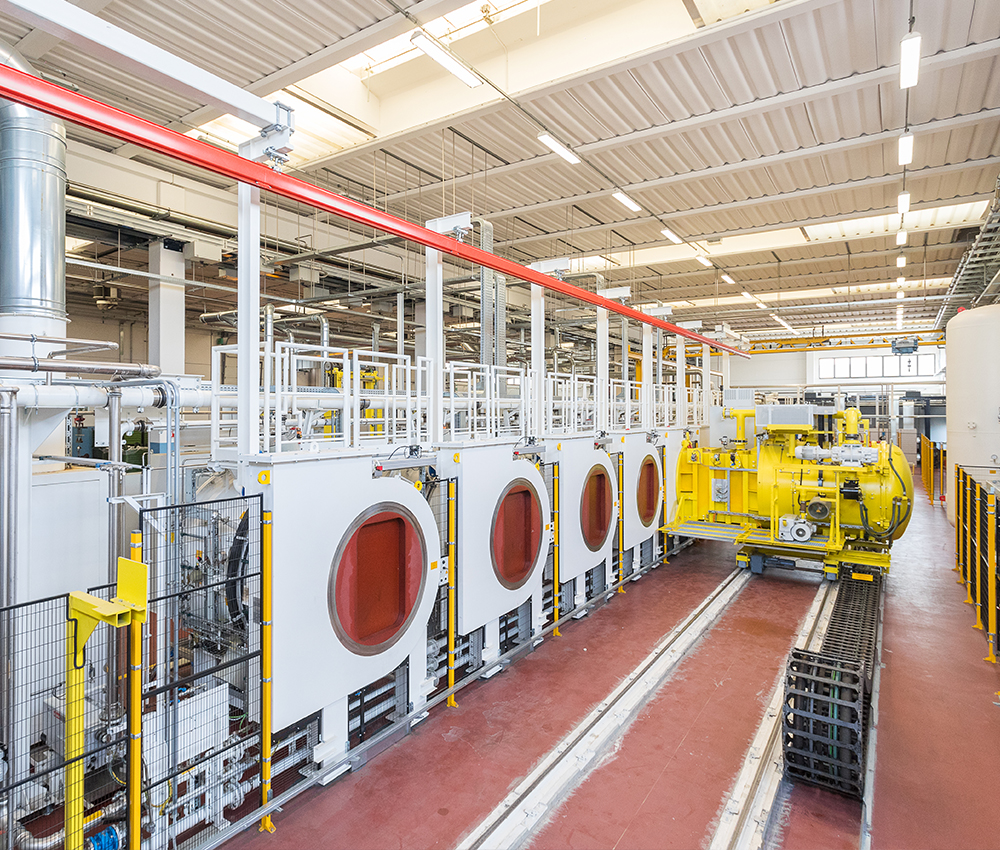 The ALD heat treatment plant, equipped of 8 vacuum furnaces with electrical power and double quenching system, high pressure gas or oil.
Let’s take a closer look at the name Aftermarket+ and the Move Beyond concept. What does that “+” actually stand for? Is it a rebranding exercise, a commercial promise or a change in approach?
I liked Aftermarket+ because it accurately describes what we have been for many years. The new element is having found a name that represents the way we work, going beyond barriers and preconceptions. That is the meaning of “Move Beyond”.
The “+”, on the other hand, stands for product quality, range breadth, availability and service. It also represents our production expertise and the investments that allow us to support these choices. That is why I see it as recognition of an existing approach. We did not start working differently when we adopted the term: this approach has developed over time, and now it has a name.
At the heart of the message is a 100% in-house production process, from raw material to finished product. In an era of outsourcing, why take the opposite approach?
We still work with external suppliers, who also play an important role in giving us flexibility when workloads increase. However, we have chosen to develop the skills and production capacity needed to avoid being entirely dependent on external suppliers at the different stages of manufacturing. Having our own resources allows us to organise them according to our needs, control quality and take responsibility for what we produce.
Of course, running a workshop is complex. It requires skilled people, investment and an efficient organisation. In-house production can be an advantage if you know how to manage it properly: owning the machines is not enough.
We believed in this approach and chose the people who would help us follow this path. Our relationships with suppliers continue, while in-house we maintain the know-how and the ability to manage the manufacturing processes.
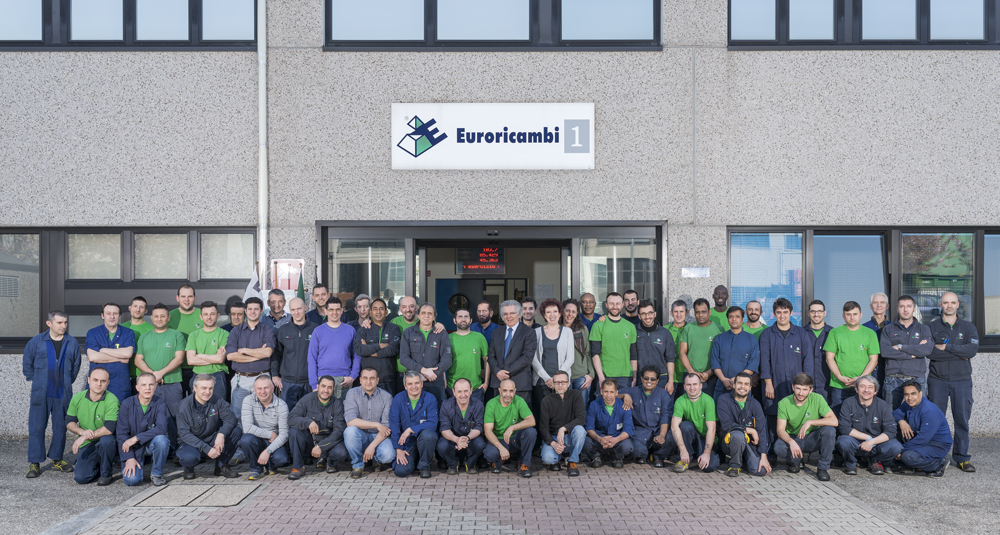 Part of the Euroricambi production team.
How is Euroricambi Group addressing the energy transition, and what future do electric motors have in these markets?
This question also reflects some of our concerns, because the future is not entirely clear. We are metalworking specialists; we manufacture gears, so electronics is not our field. However, if the future of road transport moves in that direction, we will have to reinvent ourselves. We have the resources and determination to keep pace with market developments, but also to continue leading the way, as we have always done.
There are also applications where our expertise will continue to be needed. We are already manufacturing gears for transmissions used in electric buses: a reduction stage is needed between the motor and the wheels, and that requires gears.
In heavy-duty transport, I still see significant obstacles, especially for long-distance journeys: infrastructure, charging, battery weight and costs. I also believe the timeline will vary from market to market and depending on how vehicles are used.
That is why we are trying to understand where opportunities for our business may emerge, also through dedicated resources focused on gathering specific information from different markets.